Constituyentes Atomic Center Advances the Development of Superconducting Quantum Devices
October 16, 2026
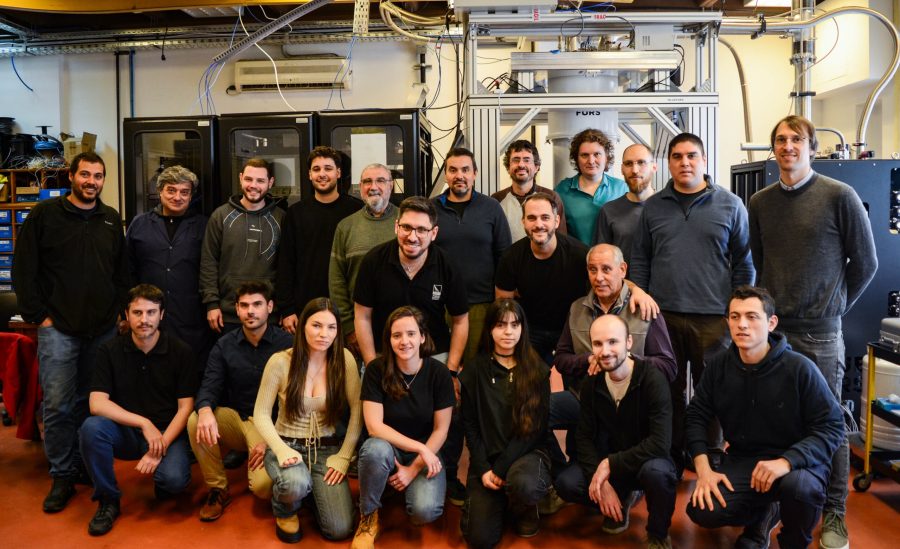
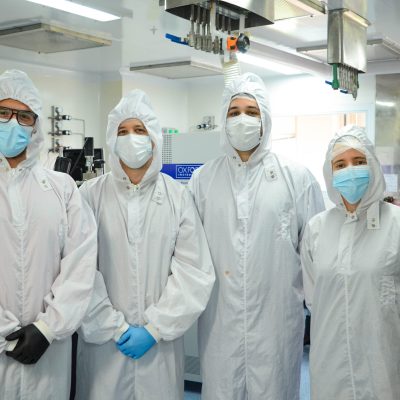
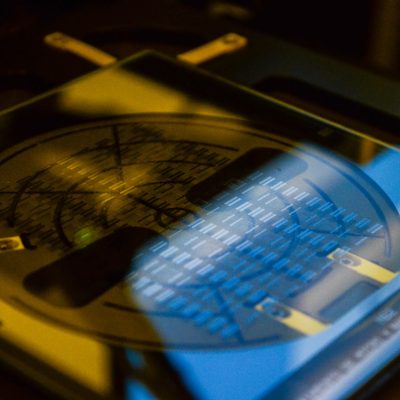
A team of researchers from the Institute of Technologies in Detection and Astroparticles (ITeDA) and the Department of Micro and Nanotechnology, both part of the National Atomic Energy Commission (CNEA), has successfully designed, fabricated, and characterized its first functional Josephson junctions at the Constituyentes Atomic Center (CAC). These components are essential for developing superconducting electronic devices used, among other applications, in the readout systems of highly sensitive cryogenic detectors.
This achievement is part of a technology transfer process driven by the research team, which has been collaborating with institutions in Germany for several years on the development of a new multichroic bolometric camera for the QUBIC Observatory. This international collaboration focuses on studying the cosmic microwave background (CMB), the relic radiation left over from the early stages of the Universe.
The goal is to progressively transfer these technologies to Argentina and establish the capabilities needed to design, fabricate, and characterize superconducting devices for scientific and technological applications.
These devices include magnetic microcalorimeters (MMCs), which are highly relevant to nuclear applications such as high-resolution X-ray and gamma-ray spectroscopy. They also include magnetic microbolometers (MMBs), which the research group is developing to detect extremely weak electromagnetic radiation signals.
After a year and a half of work, the team successfully developed and optimized the microfabrication processes required to produce Josephson junctions and adapted the experimental infrastructure needed to characterize their performance at cryogenic temperatures. This achievement brings together expertise in design, microfabrication, electronics, and cryogenics, marking an important step toward the domestic fabrication of more complex superconducting devices.
For the research team, establishing the capabilities to fabricate and characterize Josephson junctions at the Constituyentes Atomic Center represents much more than an experimental result. It marks progress toward the domestic production of essential components for highly sensitive detection technologies, gradually reducing dependence on processes and facilities available abroad.
What is a Josephson Junction?
A Josephson junction is a device consisting of two superconducting electrodes separated by an extremely thin barrier. Thanks to a quantum phenomenon known as the Josephson effect, an electrical current can flow across this barrier without electrical resistance. Josephson junctions are essential components in many superconducting electronic devices.
One of their main applications is the fabrication of superconducting quantum interference devices, known as SQUIDs, which can detect extremely small variations in magnetic flux. This sensitivity makes them essential components in the readout systems of certain high-precision cryogenic detectors.
From Experience in Germany to Domestic Fabrication
The initiative to fabricate Josephson junctions emerged from the team’s work on highly sensitive cryogenic detectors and their readout systems, carried out in collaboration with the Karlsruhe Institute of Technology (KIT) in Germany.
For several years, researchers and PhD students have participated in the design, fabrication, and characterization of superconducting devices at KIT facilities. This experience has enabled the team to acquire knowledge and expertise in advanced technologies that are now being transferred to the Constituyentes Atomic Center. The process involves adapting fabrication procedures to local infrastructure and training specialized personnel to advance toward the end-to-end development of these devices in Argentina.
One technology of particular interest is microwave SQUID multiplexing, which uses superconducting electronic systems to simultaneously acquire signals from numerous cryogenic detectors. These systems are especially important for developing highly sensitive instruments that require multiple measurement channels.
A key component of these multiplexers is the radio-frequency SQUID (rf-SQUID), which consists of a superconducting loop interrupted by a single Josephson junction. Developing the ability to fabricate these junctions domestically is therefore a fundamental first step toward local production of complete multiplexers.
How it was achieved
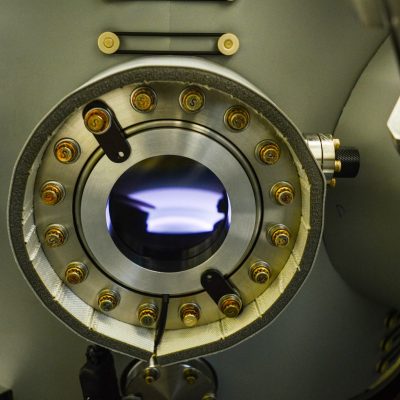
The team developed and optimized the microfabrication processes required to produce the junctions and adapted the experimental infrastructure needed to characterize them at cryogenic temperatures. The work included acquiring, installing, and commissioning a thin-film deposition system based on sputtering technology, as well as characterizing and fine-tuning the various microfabrication processes.
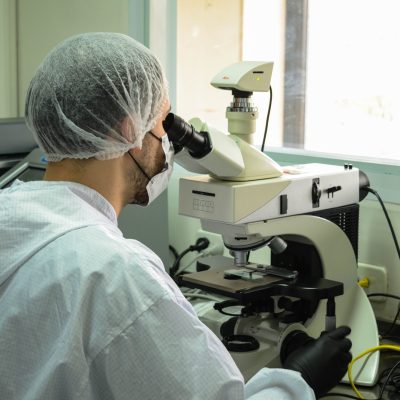
The team had to determine the appropriate conditions for depositing and etching superconducting and insulating materials, establish quality criteria, and conduct successive tests and adjustments until the first functional junctions were obtained.
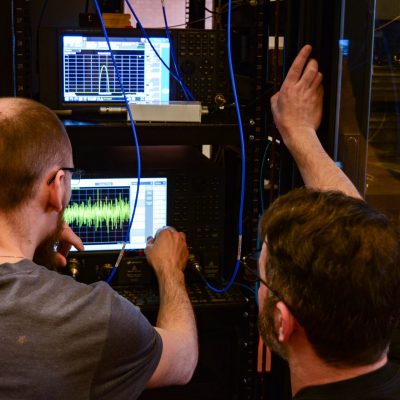
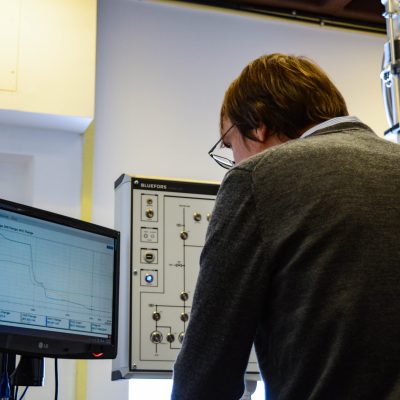
In parallel, the measurement system of the dilution refrigerator was adapted by incorporating filters and specially designed wiring to reduce electronic noise. These improvements were intended to enable precise characterization of the devices’ properties at temperatures close to absolute zero. The measurements made it possible to determine key electrical parameters needed to optimize junction quality and reproducibility.
A Collaboration That Combines Infrastructure and Expertise
The work was carried out through a collaboration between the Department of Detector Design and Construction, part of ITeDA and the Technology and Research in Universe Sciences Division (GTICU), and the Department of Micro and Nanotechnology, part of the Technological Development Division (GDT). Both departments belong to CNEA.
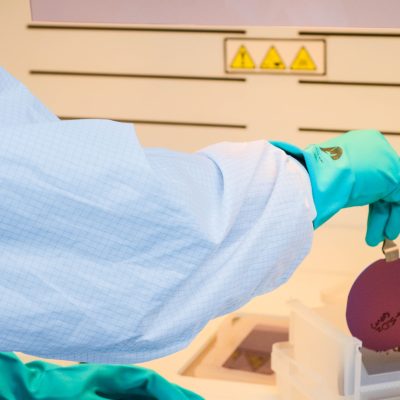
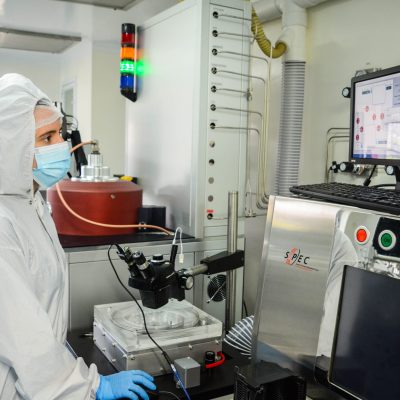
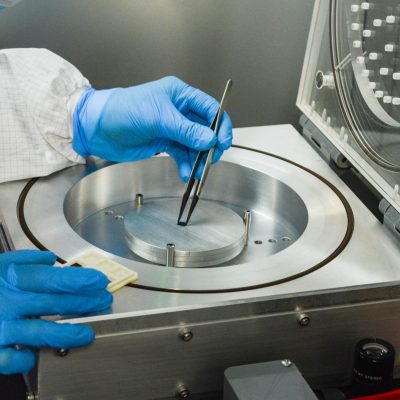
The Department of Micro and Nanotechnology contributed its cleanroom facilities, specialized equipment, and technical expertise to develop and optimize the fabrication processes. These facilities include systems for depositing and processing the superconducting and insulating materials used in Josephson junctions.
ITeDA, in turn, contributed its Cryogenics and Electronics Laboratory, the experimental infrastructure required to characterize devices at cryogenic temperatures, and the specialized personnel involved in their design, characterization, and technological development.
The experience gained through international collaboration with KIT is another key element of this initiative. Technology transfer involves more than replicating procedures developed abroad: it also requires adapting fabrication processes to local infrastructure, training specialized personnel, and generating the knowledge needed to continue improving these technologies independently.
The goal is to consolidate the domestic capabilities required to fully design, fabricate, and characterize superconducting electronic devices, fostering greater technological autonomy and opening up new possibilities for the development of highly sensitive instruments.
The fabrication and measurement of the first functional Josephson junctions at the CAC represent a tangible outcome of this technology transfer process. They also demonstrate the expertise developed by CNEA’s research and development teams in adopting and adapting advanced technologies to the country’s existing infrastructure.
Next Steps: Toward the Fabrication of Superconducting Readout Systems
The work is continuing with the characterization of the different fabricated chips to evaluate their properties and improve the quality and reproducibility of the Josephson junctions. Although some aspects still need to be optimized, the results of the initial measurements are encouraging and provide a basis for advancing toward more complex devices.
The next stages include fabricating superconducting resonators and radio-frequency SQUIDs, integrating them into functional circuits, and developing multichannel readout systems.
The main objective is to consolidate the knowledge, resources, and technological processes needed to fabricate complete microwave SQUID multiplexers at the Constituyentes Atomic Center. This technology is key to the readout of highly sensitive cryogenic detectors.
In the long term, these capabilities will make it possible to advance toward the domestic development of complete cryogenic detection systems, with potential applications in nuclear instrumentation, high-resolution X-ray and gamma-ray spectroscopy, and other measurement technologies requiring extremely high levels of sensitivity and precision.